








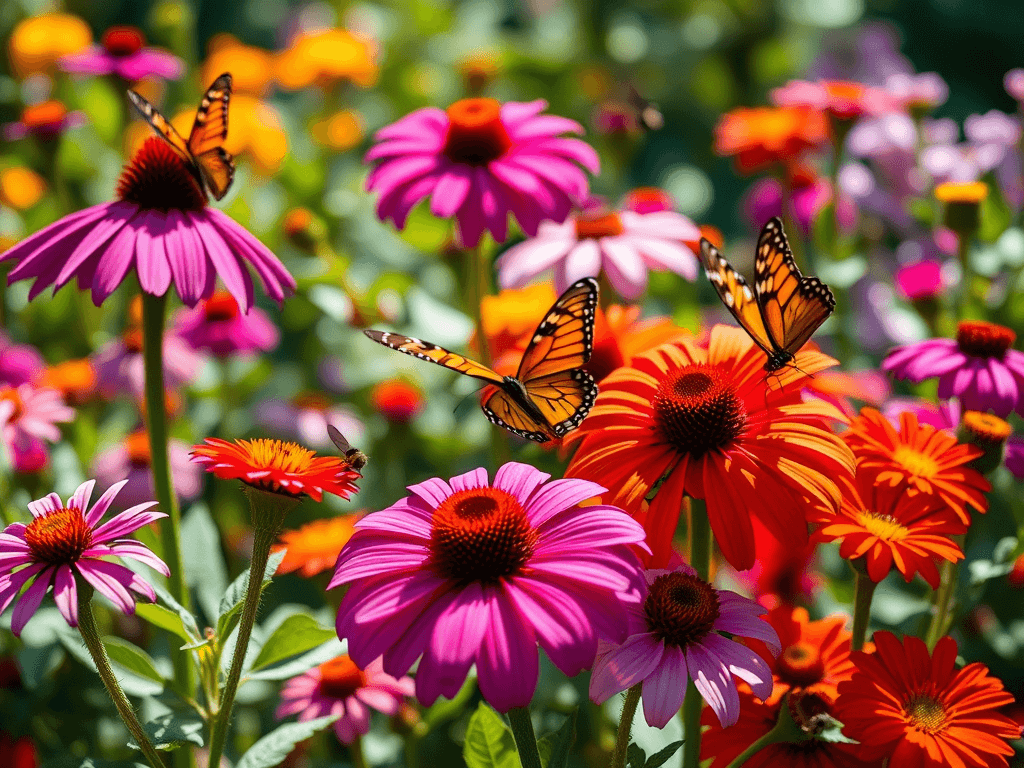
Butterflies bring beauty, movement, and life to any garden, while also playing an important role in pollination. If you’d like to invite more of these winged visitors into your yard, the secret is planting the right combination of nectar plants (for adult butterflies) and host plants (where butterflies lay their eggs and caterpillars feed). Different butterfly species thrive in different regions, so here’s a guide to help you choose flowers and plants that attract them where you live.
Northeast & Mid-Atlantic (USDA Zones 4–7)
Common butterflies: Eastern Tiger Swallowtail, Monarch, Painted Lady, Mourning Cloak
- Nectar plants:
- Purple Coneflower (Echinacea purpurea)
- Black-eyed Susan (Rudbeckia hirta)
- Joe-Pye Weed (Eutrochium purpureum)
- Butterfly Bush (Buddleja davidii)
- Host plants:
- Milkweed (Asclepias spp.) for Monarchs
- Wild Cherry & Tulip Tree for Tiger Swallowtails
- Nettles (Urtica dioica) for Red Admiral butterflies
Southeast (Zones 7–10)
Common butterflies: Zebra Longwing, Gulf Fritillary, Pipevine Swallowtail, Monarch
- Nectar plants:
- Lantana (Lantana camara)
- Pentas (Pentas lanceolata)
- Coreopsis (Coreopsis spp.)
- Zinnias (Zinnia elegans)
- Host plants:
- Passionflower (Passiflora spp.) for Gulf Fritillary and Zebra Longwing
- Pipevine (Aristolochia spp.) for Pipevine Swallowtail
- Milkweed for Monarchs
Midwest (Zones 3–7)
Common butterflies: Monarch, Painted Lady, Viceroy, Great Spangled Fritillary
- Nectar plants:
- Bee Balm (Monarda spp.)
- Blazing Star (Liatris spicata)
- Sunflowers (Helianthus annuus)
- Asters (Symphyotrichum spp.)
- Host plants:
- Milkweed for Monarchs
- Willows & Poplars for Viceroy
- Violets (Viola spp.) for Fritillaries
Southwest & Desert Regions (Zones 8–11)
Common butterflies: Queen, Monarch, Painted Lady, Cloudless Sulphur
- Nectar plants:
- Desert Marigold (Baileya multiradiata)
- Verbena (Verbena spp.)
- Salvia (Salvia spp.)
- Butterfly Bush (Buddleja davidii)
- Host plants:
- Desert Milkweed (Asclepias subulata) for Monarchs and Queens
- Cassia (Senna spp.) for Sulphurs
- Mallow plants (Sphaeralcea spp.) for Painted Lady caterpillars
West Coast (Zones 5–10)
Common butterflies: Anise Swallowtail, California Dogface, Monarch, Painted Lady
- Nectar plants:
- California Buckwheat (Eriogonum fasciculatum)
- Yarrow (Achillea millefolium)
- Verbena (Verbena lilacina)
- Native Lupines (Lupinus spp.)
- Host plants:
- Fennel & Parsley for Anise Swallowtail
- False Indigo (Amorpha californica) for California Dogface
- Milkweed for Monarchs
Gardening Tips for a Butterfly-Friendly Yard
- Plant flowers in clusters so butterflies can easily find them.
- Choose native plants whenever possible for better survival and ecological balance.
- Provide shallow water sources (like a dish with damp sand).
- Avoid pesticides, which harm caterpillars and adult butterflies alike.
With the right mix of nectar and host plants, your garden can become a thriving butterfly sanctuary. Whether you’re in the Northeast or the desert Southwest, there are flowers and foliage perfect for drawing in these pollinators.

How to Raise a Monarch Butterfly: From Egg to Winged Beauty
Few experiences in the garden are as magical as raising a monarch butterfly. Watching the journey from tiny egg to…


How to Grow a Healthy, Chemical-Free Garden Naturally: The Ultimate Guide to Organic Pest Control, Soil Health, and Safe Fertilizing
There’s something deeply satisfying about tending a garden where vegetables, herbs, and flowers thrive in harmony—without harsh chemicals. A chemical-free garden not…

A Year in the Garden: Planting a Four-Season Garden by Zone
A four-season garden is like a living calendar, changing with each chapter of the year. With thoughtful planning and an…