








Your skin is your largest organ, and it absorbs much of what you place on it daily. Many everyday personal care products—from your deodorant to your moisturizer—contain ingredients that can disrupt hormones, irritate the skin, or burden the body’s natural detox pathways.
This guide walks through the most common toxins, separates high-priority concerns from irritants, and provides a clear path to clean alternatives, both store-bought and DIY.
The High-Priority Toxins: Endocrine Disruptors & Carcinogens
Start your detox efforts by focusing on the ingredients linked to hormonal disruption and cumulative health effects. These are the chemicals you want to eliminate first.
| Ingredient | Primary Concern | Why They Matter |
| Fragrance (Parfum) | Endocrine Disruption & Respiratory Irritant | Often a blend of hundreds of undisclosed synthetic chemicals. The FDA does not require companies to disclose them, protecting them as “trade secrets.” They are frequently linked to headaches and hormone interference. |
| Parabens(methyl-, propyl-) | Hormone Mimicking | Used as preservatives. They mimic estrogen and can interfere with hormonal balance and function. |
| Phthalates | Endocrine Disruption & Reproductive Health | Often tucked secretly inside the “fragrance” blend. They are linked to endocrine disruption and concerns related to reproductive health. |
| Triclosan & Triclocarban | Antibiotic Resistance & Microbiome Disturbance | Aggressive antibacterial agents that disturb the natural skin microbiome and can contribute to antibiotic resistance. (Often found in hand soap and some toothpastes). |
| Chemical UV Filters(Oxybenzone, Octinoxate) | Hormone Disruption & Absorption | Used in chemical sunscreens. They are readily absorbed into the bloodstream and may act as hormone disruptors. |
Common Irritants & Undesirable Fillers
These ingredients aren’t necessarily hormone disruptors, but they can strip the skin barrier, cause irritation, or are simply cheap, non-beneficial fillers that have cleaner alternatives.
- Sulfates (SLS/SLES): Create a strong lather but can strip natural oils, irritate sensitive skin, and disrupt the protective skin barrier.
- Aluminum Compounds: Used in antiperspirants (not deodorants) to plug sweat ducts. While effective, they may irritate the lymph area, and many prefer to allow their body to sweat naturally.
- Mineral Oil & Petrolatum: Not toxic, but they are derived from petroleum. They are heavy and occlusive, and many people prefer more breathable, nourishing, plant-based alternatives like shea butter or jojoba oil.
Clean Commercial Swaps (Category by Category)
Here are effective, non-toxic alternatives for your daily routine. Look for paraben-free and phthalate-free labeling!
Deodorant (Avoid Aluminum & Synthetic Fragrance)
Clean options focus on odor control (bacteria) rather than blocking sweat. Look for brands that clearly state they are aluminum-free.
A Note on Baking Soda: Baking soda is non-toxic and excellent for odor control. However, its alkalinity can cause irritation for those with very sensitive underarm skin. If you experience redness, switch to a baking soda-free formula.
Sunscreen (The Crucial Swap!)
The single most important swap. Avoid chemical filters (Oxybenzone, etc.).
- The Clean Swap: Look for Mineral Sunscreens that use only Zinc Oxide and/or Titanium Dioxide.
- Try: Thinksport, Badger, Beautycounter (look for non-nano, reef-safe options).
Body Lotion & Moisturizers
These cover a large surface area, making clean ingredients vital.
- Try: Earthley, 100% Pure, Acure, Alaffia.
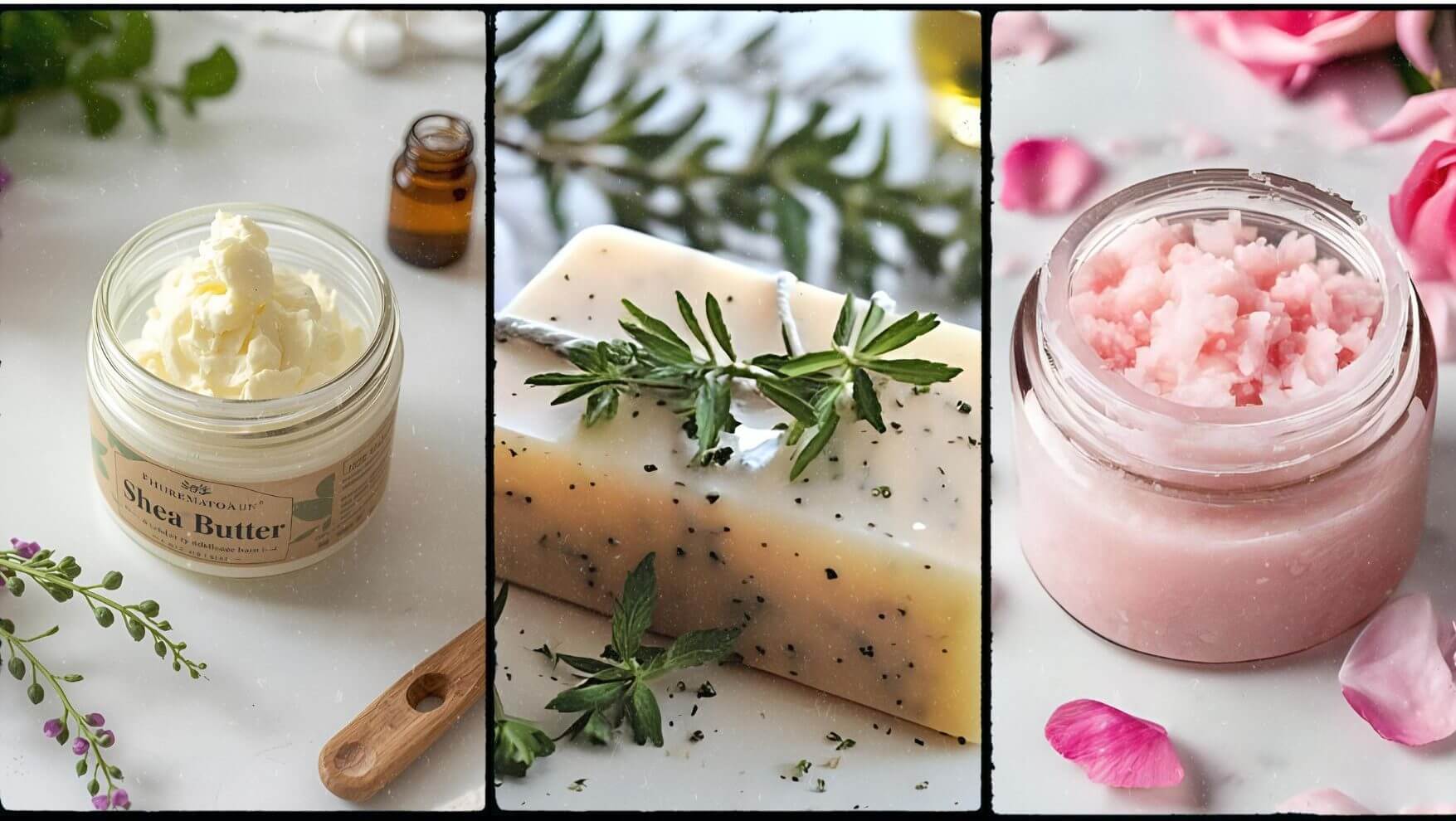
- Ultra-Clean Option: Pure shea butter, cocoa butter, jojoba oil, or rosehip oil work beautifully as single-ingredient moisturizers.
Body Wash & Soap
- Try: Dr. Bronner’s castile soap, Everyone Soap, Alaffia, or simple artisan soaps made with oils and botanicals.
- These avoid sulfates, dyes, and synthetic fragrance, keeping your skin barrier intact.
Shampoo & Conditioner
- Try: Innersense, Acure, and 100% Pure make excellent sulfate- and paraben-free options.
Perfume & Scent
- Try: Skylar, Henry Rose, Pacifica, and simple essential-oil roller blends.
- These avoid the complex, undisclosed chemical blends found in conventional perfumes.
Simple DIY Recipes
Creating your own body care products is the surest way to guarantee a truly non-toxic outcome. You control every ingredient!
1. Gentle Homemade Deodorant
- 3 tbsp coconut oil
- 2 tbsp shea butter
- 2 tbsp arrowroot powder
- 1–2 tsp baking soda (optional; adjust for sensitivity)
- A few drops lavender or tea tree oil
Directions: Melt the coconut oil and shea butter, whisk in powders, add essential oils, and pour into a small jar. Allow to set. Use a pea-sized amount.
2. Nourishing Whipped Body Butter
- ½ cup shea butter
- ¼ cup coconut oil
- ¼ cup jojoba or sweet almond oil
- 10–15 drops essential oil (optional)
Directions: Melt oils over low heat, chill until partially firm, then whip until fluffy using a hand mixer. Store in a glass jar. Excellent for dry skin.
3. Simple Sugar Body Scrub (Exfoliator)
- ½ cup fine sugar (white or brown) or fine sea salt
- ¼ cup coconut oil (melted) or olive oil
- 5 drops peppermint or grapefruit essential oil (optional)
Directions: Mix ingredients thoroughly and store in a jar. Use once or twice a week to gently exfoliate and nourish the skin.
Quick Takeaways for Clean Beauty
- Start with One: Deodorant, body wash, or lotion are the easiest and most impactful swaps to start with.
- Fewer Products = Fewer Exposures: Embrace multi-purpose ingredients like jojoba oil or shea butter.
- Patch Test: Natural products are potent too — patch test when trying something new, especially with essential oils.
- Glass is Best: Use glass containers for storage to help avoid plastic residue leaching into your products.
We’ve covered your cleaning cabinet and your bathroom shelf. Up next in the De-Tox Your Life Series, we tackle the biggest hidden exposure source in your home: your laundry room! Don’t miss Part 3: The Hidden Fragrance in Your Laundry and Clothing.
RELATED POSTS

De-tox Your Life: A Simple Guide to Reducing Household Toxins and Chemicals
Most “detoxing” happens outside the body — in your home, your routines, your products, and the everyday exposures that quietly add up.…


The Hidden Stressor in Your Home: EMFs, 5G & How to Protect Your Energy Naturally
Most people don’t realize their body is constantly interacting with an invisible stressor: electromagnetic fields (EMFs). Every Wi-Fi router, cell phone,…

Healing Frequencies: The Science of Sound to Reset Your Nervous System, Boost Repair, and Restore Balance
Are you constantly stressed? In a world full of constant stimulation, our nervous systems rarely get a true break. The good…