








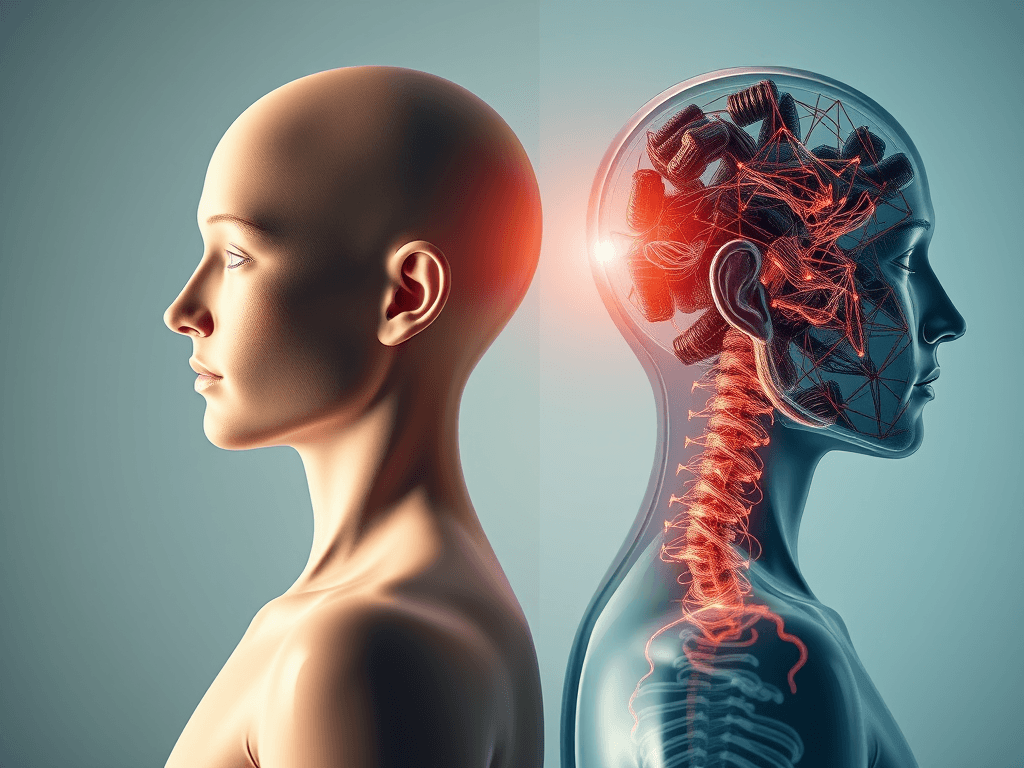
Note: This post refers to subconscious or low-grade background anxiety—not acute or clinical anxiety disorders. Those experiencing panic, severe anxiety, or significant distress should seek individualized professional support.
Many people live with anxiety that doesn’t feel like anxiety.
There are no racing thoughts. No obvious fears. No sense of panic. Yet the body feels tense, alert, restless, or unable to fully relax—as if something is always “on” in the background.
This experience is often misunderstood, minimized, or misdiagnosed as a “stressful personality” or a “mindset issue.” In reality, it frequently reflects a nervous system that has not been able to power down.
This is what is known as Subconscious Anxiety.
What Is “Subconscious Anxiety”?
Subconscious anxiety is not imagined, exaggerated, or a sign of mental weakness. It is a physiological state—one in which the body remains in low-grade survival mode, even when the mind feels relatively calm.
It differs from:
- Acute Anxiety: Sudden, sharp spikes of fear.
- Panic Attacks: Intense physical and mental overwhelm.
- Conscious Anxiety: Rooted primarily in intrusive or “what-if” racing thoughts.
Subconscious anxiety lives below conscious awareness. It is shaped by prolonged stress, sensory overload, blood sugar instability, inflammation, or long periods of needing to stay “on.” The body adapts to these conditions by staying alert—even when the original stressors are no longer obvious.
The “Translation Problem”: When Thinking Isn’t the Solution
Many people try to calm this kind of anxiety by changing their thoughts. They use logic, reassurance, or positive thinking, or pushing themselves to “just relax.” They tell themselves “Nothing is wrong. I’m safe” And yet, the anxiety doesn’t stop.
This creates the Translation Problem between mind and body. This is because the anxiety didn’t start in the mind. It is “Bottom-Up” Anxiety.
With subconscious anxiety, the initial signal comes from the body. When the nervous system detects an internal imbalance—like a blood sugar crash, gut inflammation, or sensory overload—it sends a distress signal upward to the brain.
The Red Herring
The brain’s job is to make meaning. When it receives a stress signal without a clear external cause, it tries to translate it into something understandable. That translation may sound like:
- “What if something is wrong with my health?”
- “Why do I feel like this when nothing is happening?”
- “I shouldn’t feel anxious—my life is fine.”
The mind is not creating the anxiety; it is trying to explain a signal it didn’t originate. These thoughts are often “Red Herrings”—distractions from the real, physiological root. You cannot think your way out of a survival signal.
Why Subconscious Anxiety Looks Different in Every Body
Subconscious anxiety doesn’t present the same way for everyone. It often shows up through the body systems most sensitive to stress.
1. Digestive & Gut Signals
The gut and brain communicate 24/7 through the vagus nerve. Irritation or inflammation in the digestive system can send distress signals upward, activating the stress response before any anxious thought appears. This is why anxiety can feel like it comes “out of nowhere.”
2. Sleep Disruption and Hypervigilance
Difficulty falling or staying asleep is a hallmark of this state. Even low-grade nervous system activation interferes with the body’s ability to enter deep repair. You’re not “bad at sleeping”—your body simply doesn’t feel safe enough to fully stand down.
3. Weight Loss Resistance (Metabolic Lockdown)
In a stressed nervous system, the body prioritizes protection over release. When internal stress signals remain elevated, cortisol encourages energy conservation and fat storage. I call this Metabolic Lockdown. It’s not a failure of discipline; it’s a sign that the body does not yet feel safe enough to let go of its “survival fuel.”
4. Exercise as Hidden Stress
Stress isn’t always emotional. For some, frequent high-intensity exercise—without adequate recovery—acts as another “danger” signal. In these cases, shifting toward gentler, restorative movement (walking, mobility, stretching) may help the body “un-lock” and allow weight to release more naturally.
The Core Shift: Safety Matters More Than Relaxation
The nervous system does not respond to force. Attempts to push through symptoms or aggressively “calm down” often backfire, reinforcing the message that something is wrong.
The goal is not to force relaxation. The goal is to teach the body that safety exists again.
The nervous system responds to experience, not effort. It settles when it receives consistent, predictable signals of safety:
- Predictability: Consistent, gentle rhythmic daily routines.
- Gentle Sensory Input: Reducing noise, dimming lights, choosing softer environments for adequate rest.
- Stable Nourishment: balance blood sugar to prevent “internal” stress spikes.
Working With Your Body, Not Against It
Healing subconscious anxiety is not about fixing a broken system. It is about listening to a system that has been protecting you for a long time. Small, consistent support matters more than intensity.
A helpful place to begin:
- Awareness over correction: Notice tension without trying to fix it immediately.
- One signal at a time: Choose one gentle support (like rhythmic breathing) rather than changing everything at once.
- Patience and trust: Safety is a felt experience built through repetition.
Subconscious anxiety is not a personal failure. It is a body asking for safety—and safety can be relearned.
A Final Thought
Subconscious anxiety isn’t something we “fix” overnight—it’s something we gently unwind. Along with mindset shifts, nutrition, and lifestyle adjustments, supporting the nervous system itself is key.
Practices such as grounding, sound grounding, and healing frequencies can help calm the body at a deeper level, creating a sense of safety that allows true healing to begin. If any of these resonate, you may find it helpful to explore them further as part of your personal path forward.
Important Note:
The information shared here is for educational purposes only. Before incorporating any new herbs, supplements, foods, physical activities, or complementary or holistic practices—particularly if you are taking medications or have chronic health conditions—consult a qualified healthcare professional.
RELATED POSTS

Grounding: Reconnecting with the Earth for Better Health
In our hyper-connected world, it’s easy to feel disconnected from the one thing that truly grounds us: the Earth. But…


Sound Grounding: How Earth’s Natural Frequencies Restore Balance
How Does Sound Grounding Benefit Health? In a world filled with artificial noise—buzzing electronics, traffic, and constant chatter—our nervous systems…

Healing Frequencies: The Science of Sound to Reset Your Nervous System, Boost Repair, and Restore Balance
Are you constantly stressed? In a world full of constant stimulation, our nervous systems rarely get a true break. The good…