








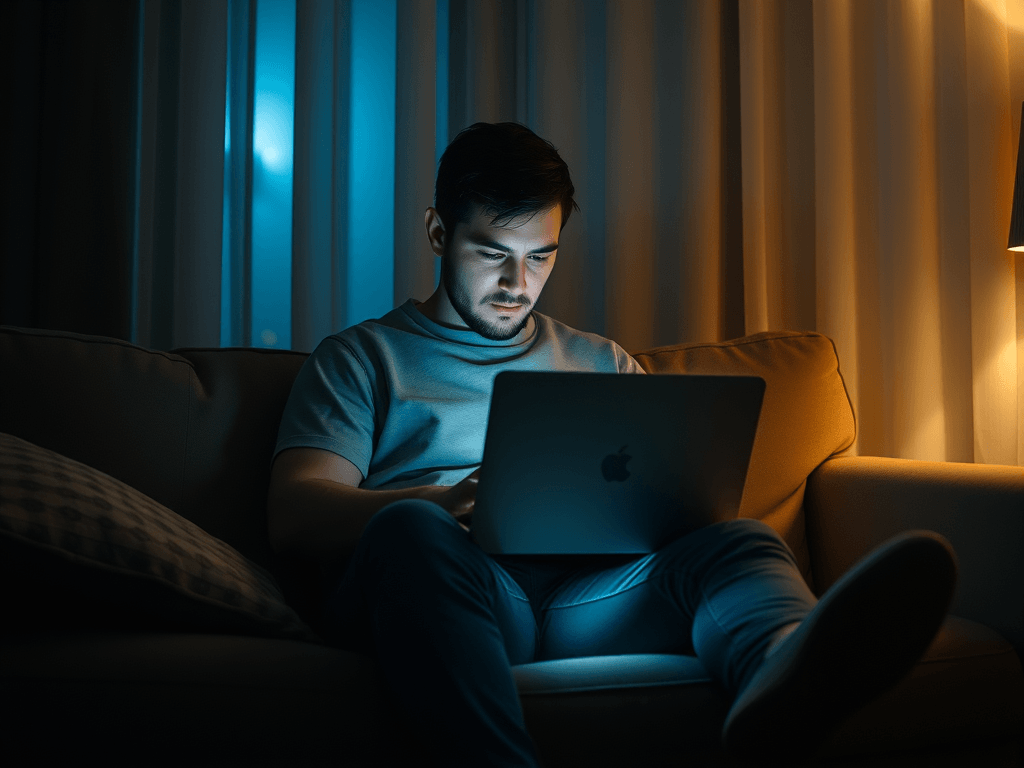
Light isn’t just something we see. It is biological information.
It is constantly signaling your nervous system, hormones, and cells about what time it is, how alert to be, and when to repair and rest. In nature, light followed a predictable rhythm: bright days, dim evenings, and true darkness at night.
Modern life has disrupted this rhythm—not through one single device, but through constant exposure to artificial light at the wrong times. The good news? Small, practical changes to your lighting environment can make a profound difference without you having to live in the dark.
Why Light Matters: The Master Clock
Your eyes don’t just “see” images; they interpret light as time-of-day information. This data is sent directly to the Suprachiasmatic Nucleus (SCN)—the master clock in your brain that orchestrates:
- Circadian Rhythm: Your 24-hour internal cycle.
- Hormones: The dance between Cortisol (alertness) and Melatonin (sleep).
- Metabolism: Blood sugar regulation and insulin sensitivity.
- Cellular Health: Mitochondrial energy (ATP) production.
- Mood, focus, and sleep quality
The Spectrum of Light at a Glance
| Light Color | Wavelength | Best Time | Primary Benefit |
| White Light | 380–750 nm | Daytime | Utility & General Visibility |
| Blue Light | 400–490 nm | Morning/Midday | Alertness & Focus |
| Amber/Orange | 590–620 nm | Evening | Melatonin Support |
| Red/Infrared | 620–1200 nm | Anytime/Evening | Recovery & Calm |
| Darkness | N/A | Night | Cellular Repair |
Types of Light & Their Biological Effects
White Light (380–750 nm)
White light isn’t a single color; it is a blend of all visible wavelengths. Its biological impact depends entirely on its “recipe”—the balance of blue, green, and red it contains.
- The Nuance: High-intensity “cool” white light is heavy in blue wavelengths and acts as a powerful stimulant. “Warm” white light contains more red and orange, making it less disruptive.
- Key Takeaway: White light is a tool for utility and alertness. Its impact is determined by its timing and intensity; what is helpful at noon can be biological “noise” at 9:00 PM.
Blue Light (400–490 nm)
Blue light is naturally present in sunlight. It is essential for health—at the right time.
- The Benefit: In the morning, it halts melatonin and spikes cortisol to wake you up.
- The Concern: At night, it mimics the noon sun, telling your brain to stay alert, disrupting sleep, and even worsening insulin resistance.
- Common Sources: Phones, tablets, LEDs, and TVs.
- Key Takeaway: Blue light isn’t “bad”—mistimed blue light is.
Orange / Amber Light (590–620 nm)
This is one of the most practical and overlooked tools for evening wellness.
- The Benefit: Very low blue light content; gentle on the nervous system and eyes, supports melatonin production.
- Common Sources: Amber “sleep” bulbs, candlelight, and blue-blocking glasses.
- Key takeaway: Orange/amber light closely mimics firelight and sunset — exactly what the body expects at night.
Red & Near-Infrared Light (620–1200 nm)
These wavelengths are abundant at sunrise and sunset. Unlike blue light, they penetrate deeper into the tissue.
- The Benefit: Supports mitochondrial health, reduces inflammation, and promotes tissue repair. Critically, it does not suppress melatonin.
- Common Sources: Sunrise/sunset, incandescent bulbs, and red-light therapy devices.
- Key Takeaway: Red light is biologically calming and restorative, making it the ideal “bridge” to sleep.
Green, Purple & Other Colors
These wavelengths exist physically but are often overstated in wellness spaces.
- Green light: Neutral, part of daylight; limited evidence for specific uses (such as migraine support)
- Purple/violet light: Mostly symbolic or aesthetic; minimal biological benefit
- Key takeaway: Some colors are discussed symbolically, but only a few have clear, practical biological relevance.
Darkness (Yes, It Matters)
Darkness is not passive — it’s biologically active.
- The Benefit: Triggers melatonin release, supports cellular repair, calms the nervous system, improves sleep depth and quality. Even dim artificial light at night can interfere with these processes.
Lightbulbs: Not All Bulbs Are Equal
When choosing lighting for your home, the “quality” of the light matters as much as the brightness.
- Incandescent & Halogen (The “Gold Standard”): These are biologically the most natural. They provide full-spectrum light rich in red/infrared and have zero flicker, making them gentle on the eyes and brain. Best for: Bedrooms and evening lamps.
- LED Bulbs: Efficient, but variable. Low-quality LEDs often have a “flicker” (often invisible but taxing to the brain) and a massive blue spike. Best for: Daytime lighting when chosen carefully.
- Pro Tip: Look for LEDs labeled “Flicker-Free” with a High CRI (90+). A high Color Rendering Index ensures the light is fuller and less “flat.”
- Fluorescent & CFL: These are the least supportive for health. They often have jagged light spikes and heavy flicker, which can contribute to headaches and anxiety. Best avoided in living spaces.
The Lightbulb Shopping Guide
| Brand | Best For | Key Feature | Where to Buy |
| Waveform Lighting | The Gold Standard | Laboratory-grade spectrum; Zero Flicker | Online (Direct) |
| BlockBlueLight | All-In-One | “BioLight” (3-in-1 day/evening/night modes) | Online (Direct) |
| Soraa Healthy | Invisible Health | Zero blue light that still looks “White” | Specialty Retailers |
| Hooga | Sleep/Bedroom | Low-cost Amber & Red “Sleep” bulbs | Amazon / Online |
| Philips EyeComfort | Daily Budget | Engineered to reduce flicker & eye strain | Home Depot / Target |
| Sylvania Natural | Visual Clarity | “TruWave” tech mimics sun’s spectrum | Amazon / Lowes |
| GE Relax | Warm Atmosphere | Low-blue “Soft White” at 2700K | Most Grocery Stores |
Quick Check: What to Look for on the Box
If you are at a store and can’t find these specific brands, look for these three specs on the back of the packaging:
- CRI 90+: (Color Rendering Index) Ensures a fuller, more natural light spectrum.
- 2200K – 2700K: (Kelvin) Lower numbers indicate “warmer” light for evening use.
- “Flicker-Free”: Explicitly stated on the label to protect your nervous system.
The Digital Dilemma: Screens
All modern screens use LED backlighting — meaning they all emit blue light. While software (like Night Shift) helps by shifting the color, it doesn’t always eliminate the intensity or the flicker of the light.
The TV Factor: While TVs are further away than phones, watching a bright screen in a pitch-black room still sends a “daytime” signal to the Suprachiasmatic Nucleus (SCN). Keep a warm lamp on in the background to reduce the contrast.
Physical Screen Filters: They don’t make night screen use “neutral,” but they meaningfully reduce cumulative stress, especially for people on computers most of the day. A complement (not replacement) for software filters.
Mitigation, Not Perfection: Your Light Hygiene Routine
We live in a bright, digital world. The goal isn’t avoidance — it’s reducing unnecessary biological stress.
Morning: The Activation Phase
- Get natural sunlight (without sunglasses) within 30 minutes of waking.
- If it’s dark, use bright, high-quality overhead lighting to jumpstart your clock.
Daytime: The Maintenance Phase
- Work near windows when possible.
- Take “visual breaks” by looking away from screens at something 20 feet away.
Evening: The Wind-Down Phase
- Kill the “Big Lights”: Switch off overhead LEDs and use floor lamps with warm/amber bulbs.
- Warm Your Screens: Use software filters AND physical filters if you must work late.
- Embrace the Glow: Use candlelight or red/amber light for reading.
Night: The Repair Phase
- Aim for total darkness. Use blackout curtains or a high-quality eye mask.
- Even a tiny “standby” light on a TV can interfere with deep sleep.
Final Thought
Light quietly shapes your biology every day. By aligning your lighting with your natural rhythms — rather than fighting them — you support better sleep, steadier energy, calmer nerves, and long-term health.
Small changes add up. Your body notices.
Important Note
Before making changes involving supplements, light therapies, or health practices — especially if you have medical conditions or are taking medications — consult a qualified healthcare professional.
RELATED POSTS

De-Tox Your Life, Part 6: Nervous System Detox (Tech, Sleep & Air)
As we move deeper into detoxing our lives, it becomes clear that not all stressors are chemical. Modern life places…


The Hidden Stressor in Your Home: EMFs, 5G & How to Protect Your Energy Naturally
Most people don’t realize their body is constantly interacting with an invisible stressor: electromagnetic fields (EMFs). Every Wi-Fi router, cell phone,…

The Sleep Reset: 3 Tiny Habits for a Better Night’s Rest
A good night’s sleep doesn’t come from doing more—it comes from removing the things that quietly keep the body on high…