








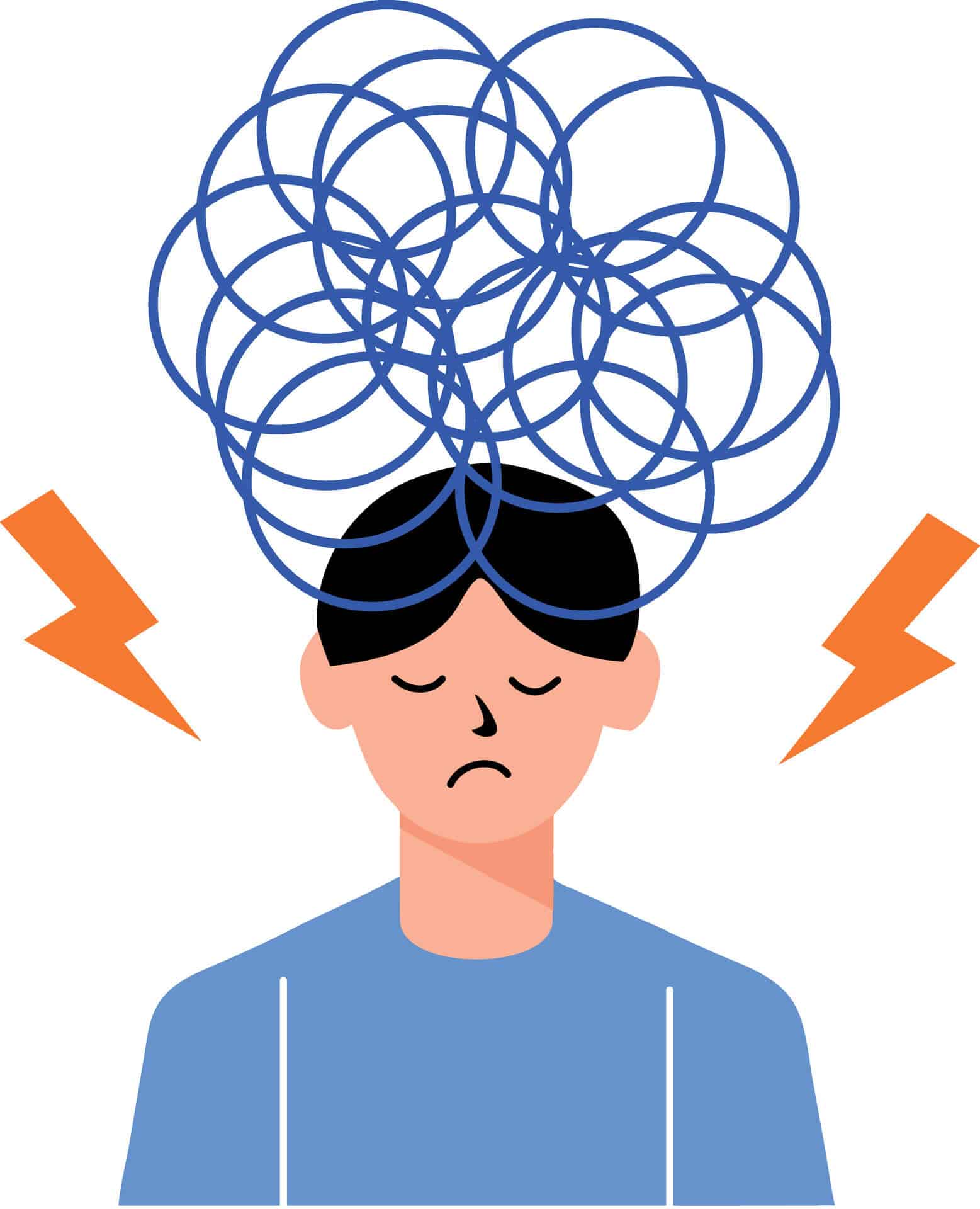
We use words like stress and tension so casually that we rarely stop to ask what they actually mean. “I’m stressed today” has become shorthand for feeling busy, pressured, or mentally overwhelmed. But stress is not just a mental experience — it is a physiological signal. And when that signal goes unexamined, it often shows up in the body as tension.
Most people think of stress in terms of thoughts and emotions: deadlines, responsibilities, mental overload. Far fewer recognize the quieter, unspoken response happening beneath the surface — muscles tightening, posture subtly changing, breath becoming shallower, movement less fluid. This physical response is not incidental. It is the body’s interpretation of what the mind is experiencing.
Two Directions: How Mind and Body Talk Through Stress and Tension
| Term | Direction | The Message |
| Subconscious Anxiety | Body → Mind | “Something is wrong; find the cause.” |
| Physical Tension | Mind → Body | “Hold fast; we have work to do.” |
Stress and anxiety are terms often used interchangeably in everyday conversation, and for this post we can consider them as overlapping signals that the mind experiences in response to challenges. While the words are sometimes used loosely, the way these signals travel between mind and body is more precise.
Subconscious anxiety is often the body signaling the mind that something feels unbalanced — internal stress. This signal may not point to a clear or immediate cause — it can appear as a kind of red herring, engaging the mind to search for an explanation before the true source has been consciously identified. (Subconscious Anxiety: When the Body Stays “On” Even When the Mind Feels Calm)
Tension, on the other hand, is the body’s reaction to mental stress or anxiety. When the mind interprets a situation as manageable but requires focus or effort, it communicates to the body to brace, hold, or endure. Calm on the surface does not always mean the body has relaxed.
The Calm-Mind, Tense-Body Paradox
One of the most overlooked contributors to chronic tension is the belief that everything is manageable. People who identify as “I can handle it” types are often more prone to physical tension — not because they are less resilient, but because they are more capable.
When the mind determines that a situation is manageable, it may never send a clear resolution signal to the body. Tasks are completed, emotions are regulated, and life continues moving forward. But when situations are managed rather than fully processed, the body may continue to hold tension long after the mind has moved on.
In this state, the nervous system chooses containment rather than alarm. Muscles remain slightly contracted. Posture tightens in subtle ways. Breathing becomes efficient rather than relaxed. None of this feels dramatic or urgent — which is precisely why it often goes unnoticed.
Where Tension Tends to Live
Physical tension commonly accumulates in areas associated with vigilance and responsibility — the neck, shoulders, upper back, and jaw. These regions are closely tied to protective reflexes and sustained attention. Over time, low-grade holding in these areas can create discomfort, stiffness, or aching without a clear cause.
Importantly, this does not mean the body is broken or injured. Tension is not a sign of failure. It is a sign of adaptation.
Why Awareness Can Create Release
At times, the signaling between mind and body is less linear and more like a chicken-and-egg situation — it isn’t always clear which came first without pausing to listen more closely.
One of the most powerful aspects of tension is that it often begins to release once it is accurately identified. When the nervous system recognizes that a sensation is protective rather than dangerous, it can safely let go.
This is why gentle awareness — rather than forceful correction — is often the first step toward relief. Asking simple questions such as “Is this damage, or is this defense?” can shift the conversation between mind and body.
Reframing Tension
Tension is not always a warning sign. It is often a strategy.
• Stress isn’t always loud
• Calm doesn’t always mean relaxed
• Tension isn’t failure — it’s unacknowledged effort
When tension is understood this way, it becomes less something to fight and more something to listen to. By recognizing how the mind and body communicate — and how easily one can continue a message the other has already resolved — we create space for true release.
Understanding tension is not about eliminating stress from life. It is about noticing when the body is still holding a story the mind believes it has already finished telling.
RELATED POSTS

The Vagus Nerve — An Introduction
Most of us were never taught about the vagus nerve. Not in school. Not at routine doctor visits. Yet it…


The Autonomic Architecture: The Constant Conversation Within
How Cortisol, Blood Sugar, Thyroid, and the Nervous System Work Together To understand why our bodies respond the way they…

Cortisol: Your Body’s Quiet Messenger of Internal Stress
We’ve been taught to see cortisol as the “stress enemy.” But cortisol isn’t about emotion—it’s a messenger inside your body, helping coordinate…